Hiển thị các bài đăng có nhãn Design Car. Hiển thị tất cả bài đăng

Thứ Hai, 26 tháng 10, 2009

Dacia SHIFT Concept a New Innovative Concept Car powered by lithium-ion or hydrogen fuel cells.

Dacia SHIFT Concept 2012.

Dacia SHIFT Concept a New Innovative Concept Car powered by lithium-ion or hydrogen fuel cells.Dacia SHIFT Concept is a new innovative concept design that was created independently by a young Romanian designer - Liviu Tudoran. As have been said by the designer that the Dacia SHIFT Concept will be the perfect vehicle for roaming the crowded streets of 2012.
Dacia SHIFT Concept wears the design cues of the Duster concept and it will offering space for two passengers as it is an electric two-seater car. Dacia SHIFT Concept 2012.

Dacia SHIFT Concept is follows the lines of the new identity of the Dacia brand, and it will be powered by lithium-ion batteries. However, it also can accommodate hydrogen fuel cells.
Liviu Tudoran, a young Romanian designer has presented an electric sport model called Dacia Shift which runs using lithium-ion batteries and Tudoran sees the Dacia SHIFT Concept roaming the crowded streets of 2012 and offering space for two passenger. Dacia SHIFT Concept 2012.

The Dacia SHIFT Concept will be powered with the help of lithium-ion batteries and can also accommodate hydrogen fuel cells. Dacia Shift is a concept keeping the needs of the young Bucharest residents in mind, which will not exceed the stage of drawing and sketch, as it being an independent project with no official connection with the Dacia
brand.
Dacia SHIFT Concept 2012.

Thứ Năm, 15 tháng 10, 2009

Yamaha OX99-11 Supercar 3498 cc V12


Yamaha OX99-11 Supercar 3498 cc V12

Yamaha initially approached a German company to come up with some designs for the supercar. However Yamaha dismissed the proposals as they were considered to similar to existing supercars. IAD were at this point hired to continue work on the project. In 1992 IAD came with an initial version of the OX99-11.
The Yamaha OX99-11 was a supspercar designed by IAD, an English engineering consultancy, and Yamaha subsidiary Yilon Technology.
While the Yamaha OX99-11 was originally slated to appear in 1994, the roots of the OX99-11 project began in 1989 when Yamaha began competing in Formula One, later this spawned the desire to create a supercar based on Formula One technology.
Despite the fact the Formula One team was less than competitive, a new engine called the OX99 appeared in 1991, helping to give the new car a name.
Yamaha OX99-11 Supercar 3498 cc V12

The new car featured an unusual and somewhat ugly design, features like the prominent front spoiler, tandem seating, cockpit shaped roof and protruding engine scoop stood out from other vehicles. Other features of the car which were rather extreme included the carbon fiber chassis and OX99 engine which were borrowed from the F1 car.
Budget disagreements meant the Yamaha OX99-11 project was taken from IAD and handed over to Ypsilon Technology, who were given 6 months to finish the project. A further blow to the project was came in the form of a financial crisis which hit Japan and it was decided that there wouldn't be enough buyers capable of handing over the vast sums of money needed to buy the car. In 1994 the Yamaha OX99-11 project was axed. By this point only 3 prototypes had been constructed.

Thứ Tư, 14 tháng 10, 2009

2009 LM5 McLaren Concept Car by Matt Williams


2009 LM5 McLaren Concept Car

The LM5 was designed as a vehicle which could rekindle the drama and sophistication of the legendary McLaren F1. And while McLaren have since revealed the MP4-12C supercar, it's not exactly in the same league as the technological tour-de-force which was the original F1.
The McLaren LM5 is a concept created by Matt Williams, a graduate of Coventry University's Transportation Design degree program. The LM5 was produced as his final year project.
The styling of the F1 was primarily dictated by function. However it also retained a unique sense of character and presence. Williams thought it would be interesting to develop the brand identity of McLaren - but more specifically the F1 model - and bring it into the 21st Century. And while the LM5 concept was designed to offer a similar personality and overall stance to the F1, it was also designed to utilize more extreme and race-influenced bodywork.
2009 LM5 McLaren Concept Car

The McLaren LM5 concept features the same three-seat layout with a central drivers seat as the old F1. All three sports seats have an extremely slim profile to reduce weight and free up interior space, and instead of conventional safety belts all the seats feature racing-style four-point harnesses. The multifunction steering wheel features a central display for the tachometer.
The proposed engine for the McLaren LM5 concept is a worked over 5.0 litre V10 sourced from BMW. Mounted midship in the carbon fibre pre-preg chassis this unit would make the LM5 a force to be reckoned with on both road and track.
While the LM5 is at the moment just one man's idea of what the F1's successor could look like, the design itself uses both past and present McLaren influences giving it a sense of realism. And It's important to remember that McLaren themselves have made it public knowledge that they're working on developing a successor to their most iconic car within the next couple of years.

Splinter Wooden Supercar the first supercar ever to be designed and engineered using wood


Splinter Wooden Supercar twin supercharged V8 engine

The Splinter is a very unusual and innovative vehicle. It's the first supercar ever to be designed and engineered using wood as the primary construction material. In the past some vehicles have used wood to various degrees in their construction, but never to the extent the Splinter does.
The Splinter is a graduate project by students at North Carolina State University. Wood has been used where possible, including the chassis, body, and even a large percentage of the suspension components and wheels.
While moving components like the suspension might seem impossible to fashion out of wood, the Splinter team realized that a leaf spring shares many traits with longbows, flexible, durable and with progressive spring rates. After research they decided to use Osage orange wood, which is the strongest wood found in North America. The front suspension therefore comprises of a laminated Osage orange wood leaf spring transversely mounted and providing suspension for both front wheels.
Splinter Wooden Supercar twin supercharged V8 engine

The wheels of the Splinter are made from rotary cut oak veneers. Each veneer was rotated 36 degrees from the previous layer to maximize grain direction alignment with the spokes. A walnut sunburst was cut for the front while a cherry sunburst was used on the back.
The mid-engined layout of the Splinter wooden supercar comprises of a 4.6 litre, twin supercharged V8 mated to a 6 speed manual gearbox and Getrag limited slip differential.
The Splinter is not intended for mass production, nor is it designed to break and performance or handling records. The design is merely to show that with intelligent and creative thinking a car can be created out of the most unlikely materials.

Thứ Ba, 13 tháng 10, 2009

Tesla Roadster Electric Sports Car by Tesla Motors


Tesla Roadster Electric Sports Car by Tesla Motors

The first electric car manufactured by Tesla Motors, the high-performance, zero-emissions Tesla Roadster sports car, was unveiled before a crowd of car buffs and potential customers.
The electric Tesla Roadster has the equivalent of 135 mpg and a range of 250 miles on a single charge, a combination unseen until now in a mass-produced electric car. Its extended range is due to its state-of-the-art lithium-ion Energy Storage System.
The Tesla Roadster is capable of accelerating from 0-60 mph in four seconds.
Using a unique two-speed electrically activated manual transmission, the Tesla Roadster's power comes from a 3-phase, 4-pole AC induction motor. The motor is controlled by the Power Electronics Module (PEM) which also controls the inverting direct current to 3-phase alternating current, charging and braking systems.
Tesla Roadster Electric Sports Car by Tesla Motors

Tesla Motors's engineers have gone to great lengths to ensure that not only is the Tesla Roadster safe to drive, but also is safe when charging, at home or on the road.
The electric motor's efficiency rating is likely to be as high as 95 percent, while the internal combustion engine's efficiency is 20 percent or less. With this efficiency, the Tesla Roadster achieves the equivalent of 135 mpg.
That efficiency doesn't slow this sleek sports car down, either. Estimated 0-60 mph time is around four seconds, and with an electric motor
, the torque is instantaneous, throw-you-back-in-the-seat responsive.

Thứ Hai, 12 tháng 10, 2009

8c Competizione Alfa Romeo Maserati V8 engine Sports Car


8c Competizione Alfa Romeo

Designed and developed at the Alfa Romeo Style Centre, the 8c Competizione prototype pays homage to road racing Alfa's of the 30s and 40s which bore the 8c signature, while 'Competizione' refers to the 6C 2500 Competizione, a car driven by Fangio and Zanardi in the Mille Miglia race of 1950. (see 2006 BMW Mille Miglia concept)

8c Competizione Alfa Romeo


The Alfa 8c is a retro design powered by a Maserati V8 engine
Alfa Romeo are well known for producing flamboyant and beautifully styled cars, sometimes overlooking reliability. The 8c Competizione concept takes this philosophy to another level, and is one of the most stunning designs to come from the Italian manufacturer.

The flowing graceful lines of the 8c Competizione are a trait shared with another Alfa concept, the Nuvola. Both cars are inspired and shaped by Alfa Romeo models of the past, and their aesthetic design reflects this retro influence.

Thứ Sáu, 9 tháng 10, 2009

Honda FC Sport Hidrogen Fuel Cell Concep The fastest Sports Cars


Honda FC Sport Fuel Cell Concep

The FC Sport can be summed up like this: Imagine beating your best lap time while hearing nothing but the tires rubbing the tarmac and the quiet buzz of the high-torque electric motors. Picture a true no-holds-barred supercar with all the speed, handling and sleek looks of today's fastest sports cars, yet without the noise, heat, vibration and emissions of the internal-combustion engine.
Built as a design study, the FC Sport demonstrates Honda’s vision for making environmentally responsible vehicles that are also fun to drive. The "FC" stands for "Fuel Cell" as in hydrogen fuel cell—the same technology powering the FCX Clarity. With a 3-seat, driver-centered cockpit, a fuel cell powerplant opens the door for unprecedented engineering flexibility, allowing for a lower center gravity than any modern, piston-engined sports car. The FC Sport is symbolic of a future in which alternative fuel and zero emissions will rule the sports car world.

Gumpert Apollo Super Sports Car pure high-performance sports car with racing qualities.


Gumpert Apollo Super Sports Car.

The Apollo is the end result of a combining of skills between Roland Gumpert - ex boss of Audi Sport, Roland Mayer - owner of MTM, and Audi.The Gumpert Apollo is essentially a race car modified for the road.
Audi played somewhat of a back seat role in the Gumpert Apollo's production. Audi technology is available to the Apollo, however the car cannot directly rival existing Audi products, and Audi owns any subsequent patents from the Gumpert Apollo's development.
The Gumpert Apollo concept uses an Audi sourced 4.2 litre V8 (like the one used in the new Audi R9 sports car) enhanced by twin turbochargers making a very respectable 650 horses, all this power runs through a six speed sequential transmission to the rear wheels, and the car is capable of reaching 60 mph in 3 seconds.
The Gumpert Apollo is a two seat mid-engined race car which makes few concessions to be road legal.
Overall the car has a purposeful look, Audi design influence creeps into the centre grille, other than this the concept is quite original, if somewhat rough. The front wheel arches hug the tires in a perfect circle before dissolving into the multiple vents down the sides. Noticeable race inspired design cues include the front lip air splitter and and roof mounted triangular air intake, no doubt necessary to feed the hungry monster lurking below.

Below is the Gumpert Apollo press release.

Once the son of the god of war Zeus, responsible for the victory and the template for masculine beauty, he is now the namesake of the breathtakingly uncompromising super sports car that combines aesthetics and function like no other.
The Gumpert Apollo is the perfect synthesis of a road vehicle and track car. It evokes passion and driving pleasure beyond all expectations. With 650 bhp, 224 mph top speed and acceleration from 0 to 62 mph in just 3 seconds, you would have to go a long way to find an alternative to Apollo. The complete package is available in a cost-benefit ratio that cannot be matched in this exclusive vehicle class. As a pure high-performance sports car with racing qualities that is also approved for use on the road, the Gumpert Apollo sets new standards.
Roland Gumpert, managing director and the driving force behind the company that builds the car, has created a manufacturing environment that combines engineering excellence with wideranging automotive and racing competence. Experts within the industry are all familliar with the name Gumpert. In the mid 1970s, the long-standing Audi manager was the driving force behind the development of the vehicle "Iltis", the original predecessor of today's "Quattro". In the years undere his management, Audi won a total of 25 World Rally Championship races and was the 4-time winner of the World Rally Championship.
An Exceptional Design
The silhouette of the Gumpert Apollo, which has been optimized upon numerous times after tests in the wind tunnel, reflects its above-average performance capability. In its profile, the Apollo's dynamic appearance is further enhanced by its dimensions and its streamlined, long and wide shoulder lines. The mid-engine layout is emphasized by the cockpit, which is clearly situated toward the front of the vehicle, and the long wheel base; both factors ensuring optimum driving qualities. Massive air inlets and outlets in the front, and on the side in front of and behind the doors, leave no doubt about its potency. They supply the two turbochargers and the high-performance braking system with enough fresh air to ensure that the car maintains optimum operation for the duration of the race.

Driving Dynamics Redefined
The Gumpert Apollo's suspension was developed to ideally complement the clever aerodynamics of the car body, resulting in unusual driving dynamics. The Apollo is taut but not hard and offers the driver and passenger an extraordinary high level of comfort despite being purely designed for performance. It demands the complete attention of the pilot but does not overwhelm him thanks to its ultra-precise and predictable driving characteristics even at top speed. An ideal weight balance of 42 to 58 percent between the front and rear axis rounds it off.

Proven Performance in a New Dimension
The impressive power of the high-performance eight cylinder engine is based on the proven V8 aggregates from Audi. This engine in standard configuration is optimized for use in racing and road vehicles and produces 650 bhp as a biturbo engine. With a weight of only 430 lbs, it plays a major role in ensuring the Apollo has an ideal weight and its fascinating driving dynamics.

Via the two exhaust gas turbochargers, the combustion chambers are force-fed fresh air that has previously been cooled to the ideal temperature in large intercoolers.

The sequential six-speed transmission, that incorporates Formula 1 know-how, guarantees the efficient implementation of the energy generated.

Purism and Luxury in the Interior
Low weight was the top priority and has been achieved by using high-tech materials. For instance both the monocoque and the integrated instrument panel are made of carbon-fiber.

The seat position is individually set for every customer with padding, upholstery, adjustable pedals, and the steering column. The Gumpert Apollo is a made-to-measure sports car and in line with this principle, customers can design the interior to meet their preferences, be it pure performance or somewhat more luxurious.

The air conditioning system guarantees the perfect interior temperature while traveling. The high-end navigation system with DVD-player and sound system helps you get from A to B and delivers in-car-entertainment. The backward facing camera integral to the system helps the driver when reversing or, as Gumpert says, simply shows him how quickly the overtaken cars disappear from view.

Thứ Năm, 8 tháng 10, 2009

The 9FF GT9 Porsche Sport Car


Porsche Sport Car 9FF GT9

Porsche Sport Car 9FF GT9 the engine features titanium con-rods and forged pistons, which was necessary to handle the 987hp output. Peak torque of 964Nm falls between 5,970 and 7,850rpm.
The 911 GT3 body, on which it’s based, has also been stretched by 300mm and has had the roof lowered by 120mm to maximize downforce at high speeds. Thanks to carbon-fiber and Kevlar construction, the entire vehicle will weigh in at just 1,326kg.
Although the car is loosely based on a Porsche 911, its mechanical package has been totally revised. Ditching the 911’s rear-engine layout, 9ff engineers created a custom mid-mounted engine design utilizing the tuner’s twin-turbo 4.2L flat-six engine.
Stranded somewhere between a racing car and everyday transport,the interior of the GT9 is, it has to be said, eye cancer material. Fatthauer's genial wife decided on the race suit-style dash and door trimmings and it makes you wonder what their house is like. Luckily it's a bespoke car, so the owners will get their choice of interior and it's hard to imagine anyone demanding this one. Still, it comes with a real stereo, passenger airbag and more, transplanted deftly from the interior of a 911, and Porsche owners will recognise most of the components on display - from the ignition slot right through to the handbrake and indicator stalks.

Thứ Tư, 7 tháng 10, 2009

Sky Concept The Mazda 2010 Featuring the next-generation Mazda SKY concept powertrain technologies and comprehensive advancements in weight reduction

Sky Concept The Mazda 2010

The next-generation compact concept car imbued with Mazda’s fun-to-drive character, will make its Japanese debut at the Tokyo show The Mazda Kiyora. Featuring the next-generation Mazda SKY concept powertrain technologies and comprehensive advancements in weight reduction, the Kiyora achieves outstanding fuel economy, estimated to be 3.1 l/100 km (under Japan’s 10-15 mode test cycle).
To make its Japan debut * Mazda Kiyora concept car, which achieves 3.1 l/100 km fuel economy.
Mazda’s theme for the 2009 Tokyo Motor Show is “The Mazda SKY concept – Providing driving pleasure and environmental and safety features for all customers!” Under the headings of “Today,” “Tomorrow” and “The Future,” Mazda will display advanced technologies designed to improve the average fuel economy of Mazda vehicles sold globally by 30 percent before 2015 compared to 2008 levels. This is one of the goals of Mazda’s long-term vision for technology development, Sustainable Zoom-Zoom.
The SKY concept embodies Mazda’s desire to ensure an “everlasting blue sky” under which drivers will always be able to enjoy the pleasure of driving afforded by owning a Mazda. The concept also reflects the “sky’s the limit” aspirations of Mazda’s engineers as they employ unconventional thinking to achieve optimal performance in every vehicle that bears the Mazda nameplate.
Mazda is committed to significantly improving the core aspects of its vehicles that affect performance – engines, transmissions, and lighter vehicle weight – in order to achieve elevated driving pleasure together with outstanding environmental and safety features. The Mazda SKY concept defines Mazda’s approach to developing next-generation powertrains that will significantly improve the eco-friendliness and dynamic performance of all Mazda vehicles.
Based on the SKY concept, Mazda’s “Technologies for Tomorrow” display at this year’s Tokyo Motor Show will include the next-generation direct-injection petrol Mazda SKY-G engine and the Mazda SKY-D clean diesel engine. Both offer improved eco-friendliness and torque thanks to optimised combustion efficiency. Mazda will also reveal its first next-generation automatic transmission, the Mazda SKY-Drive, which offers first-rate fuel economy and a direct driving performance feel
Alongside the SKY concept exhibits, Mazda will also feature a “Today’s Technologies” exhibit that includes i-stop, a unique idling stop system that was introduced with the all-new Mazda3 (Axela in Japan). “Future Technologies” will showcase the advanced Mazda Premacy Hydrogen RE Hybrid, with its hydrogen-powered rotary engine, and various vehicle technologies under development as part of Mazda’s drive to realise an accident-free and safe motorised society.

Toyota FT-86 Concept definitely looks cool.Toyota sports car concept


Toyota FT-86 Concept definitely looks cool.

The concept car Toyota FT-86 (that’s hachi roku in Japanese) goes back to the fundamental qualities of the classic sports car with its rear-wheel drive configuration, compact dimensions, low centre of gravity and lightweight construction. Under the bonnet there is a 2.0-litre boxer engine that is strong on both performance and environmental quality
Great to own and fun-to-drive: those are the guiding principles behind a new Toyota sports car concept that will break cover for the first time at the Tokyo motor show later this month.
The show car’s bodywork is finished in Flash Red, an eye-catching shade that contains a hint of blue. Inside, the cabin design further expresses the car’s classic sporting qualities with many of the structural elements left uncovered.

Thứ Bảy, 3 tháng 10, 2009

The Veyron Bugatti Concept Sport Car by Hartmut Warkuss


Veyron Bugatti Concept Sport Car

The Veyron was designed by Hartmut Warkuss of Volkswagen rather than Giorgetto Giugiaro of ItalDesign who had handled the three prior Bugatti concepts.
Development continued throughout 2001 and the EB 16/4 Veyron was promoted to "advanced concept" status. In late 2001 Bugatti announced that the car, officially called the Bugatti Veyron 16.4 , would go into production in 2003. The car experienced significant problems, however. High-speed stability was difficult, with one prototype destroyed in a crash and another spun out during a press demonstration at the Monterey Historics event in Mazda Raceway at Laguna Seca . Production of the Veyron was delayed indefinitely.
After the release of the car, it has become known that while each Veyron is being sold for £840,000, the production costs of the car are approximately £5 million per vehicle. As Bugatti, and therefore Volkswagen, are making such a huge loss, it has been likened by influential journalist Jeremy Clarkson to Concorde ; both are largely impractical experiments in technology and ground-breaking performance created just to prove that it could be done. A car the like of the Bugatti Veyron may not be seen in production again for some time to come, if at all.
The Veyron features a W16 engine —16 cylinders in 4 banks of 4 cylinders, or the equivalent of two narrow-angle V8 engines mated in a vee configuration. Each cylinder has 4 valves , for a total of 64, but the narrow V8 configuration allows two camshafts to drive two banks of cylinders so only 4 camshafts are needed. The engine is fed by four turbochargers , and it displaces 8.0 L (7,993 cm³/488 in³) with a square 86 by 86 mm bore and stroke.
The Veyron's 16-cylinder engine is based on the innovative "W" design introduced in the 2003 Volkswagen Passat. The Veyron's version features two 90-degree V8s offset by 15 degrees. The offset allows each cylinder to be placed close to its neighbor, which reduces the total size of the massive 8.0-liter engine. A Formula 1?style dry-sump lubrication system keeps the engine moving smoothly. It's easier to spin many small turbochargers than one or two large ones, so Bugatti employs four turbos to reduce boost lag. The strategy works: The engine creates 922 lb.-ft. of torque at only 2,200 rpm.
Putting this power to the ground is a dual-clutch DSG computer-controlled manual transmission with 7 gear ratios via shifter paddles behind the steering wheel. Or it can be driven by full automatic transmission. The Veyron also features full-time all wheel drive , necessary given the output of the engine. It uses special Michelin PAX System run-flat tires, which had to be designed specifically for the Veyron, and which are capable of running at 402 km/h (253 mph).
The car's wheelbase is 2700 mm (106.3 in). Overall length is 4466 mm (175.8 in). It measures 1998 mm (78.7 in) wide and 1206 mm (47.5 in) tall. Curb weight is expected to reach 4300 lb (1950 kg) with a power to weight ratio of 513.3 hp per ton (metric) or 4.36 lb/hp (SAE).The Bugatti Veyron has a total of 10 radiators .

Shelby Twin-Turbo V8 Engine Supercar Ultimate Aero

Shelby Twin-Turbo V8 Engine Supercar Ultimate Aero

Shelby Supercar engine in the base Aero model is same as the previous year, but the Ultimate Aero has a 6.35-litre (387.2 cu in) engine, rated at 1,183 bhp (882 kW) at 6950 rpm and 1,094 lb·ft (1,483 N·m) torque at 6150 rpm, and the supercharger is replaced by a twin turbocharger with cabin adjustable boost pressure. The car is designed to use 91-octane gasoline. The 6-speed transmission is readjusted to increase the theoretical top speed to 273.75 mph (437 km/h) at 7200 rpm, however whether the vehicle is able to reach this speed is highly questionable and has never been tested.
Twin-Turbo V8 Engine with 1183 hp, base price is $654,400. Tested in March 2007 by Guinness world records
Wheels on the base model are sized 18-inch at the front and 19-inch at the rear, while the Ultimate Aero TT has wheels an inch larger at each end.
The 2007 models are heavier, with the base model weighing 2,850 lb (1,290 kg), and Ultimate version 2,750 lb (1,250 kg). Unlike the previous year, base models have a navigation system, 10-speaker audio/CD/DVD system, video/DVD screen, back-up camera, air-conditioning, and trunk space as standard equipment. These come optional on the Ultimate.
The first production 2007 Ultimate Aero TT car was sold on eBay for US $431,100. Later cars are expected to cost US $654,000. Only 24 Ultimate Aero TT's are going to be produced from 2006-2007. The Ultimate Aero TT made its international debut on the International Show Circuit in November 2006, culminating with the world record top-speed competition held in Wolfsburg, Germany in May 2007.

Mustang Saleen S7 Twin Turbo Design Sport Car

Mustang-Saleen-S7-Twin-Turbo-Design-Sport-Car

Saleen knows all about power. As in S281 Mustangs, N2O Focuses and the S7, America’s first (and still the only) mid-engine exotic supercar. When it went on sale in 2002, the S7 was the only street-legal car in the U.S. with more than 500 horsepower and 500 lb-ft of torque. The media and S7 owners have raved about the car since it first smoked the rear tires in anger. And it has been recognized by numerous automotive magazines as the fastest production car in the world. But during the past three years the automobile marketplace has witnessed an explosion of performance with models from manufacturers including Ferrari, Lamborghini, Mercedes-Benz, Porsche and Chevrolet touting power numbers above the once magic 500 level.
Designed by Saleen engineers, the S7's engine and drivetrain incorporate the latest in modern racing technology. The new all-aluminum V8 engine casting was engineered and tooled by Saleen to displace seven liters. Redline is 6500 rpm. Space age materials and engineering are used throughout, including stainless steel valves, titanium retainers, beryllium exhaust valve seats, an aluminum throttle body, Saleen designed aluminum CNC-machined cylinder heads and stainless steel exhaust system. An exclusive Saleen-designed Front Engine Accessory Drive (FEAD) system results in an extremely compact engine, allowing for better packaging and overall weight distribution. The V8 incorporates a unique Saleen-designed side-mounted water pump, a belt-driven camshaft drive and a Saleen-engineered dry sump oil delivery system. The engine's mid-chassis placement optimizes weight distribution and center of gravity, making room for an unusually tall engine that allows for a very efficient induction system. Air enters a roof intake, passes through a 90-mm mass air meter and feeds into a carbon fiber plenum. From the plenum the air is routed to the twin ball bearing turbos, is pressurized to 5.5 psi max and then passes through an oval-bore throttle body into an aluminum intake manifold with eight individual runners.

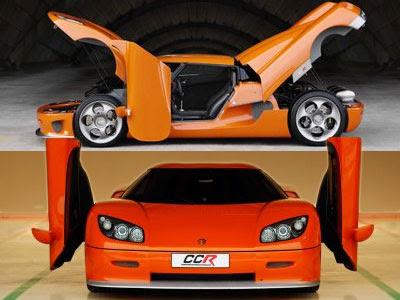
Koenigsegg CCR Design Sport Car Concept

Koenigsegg CCR Design Sport Car Concept

Koenigsegg's design seeks to give an interpretation of strength and flowing motion. The body of a Koenigsegg is formed for one ultimate purpose; speed. Its beauty is the beauty of speed itself. The surfaces are shaped to perfectly aerodynamic, an appearance that does not deceive. All aspects of this machine serve its one fundamental objective. Both the body and chassis of a Koenigsegg are made of extremely lightweight carbon fibre composite, reinforced with Kevlar and aluminium honeycomb. Its race-bred suspension system brings the driver in control of all movement, even under the toughest racing conditions.
The car was styled by Christian von Koenigsegg himself but its shape is largely dictated by aerodynamics. It is not as striking as Pagani or Enzo. At some angles it even looks bulky, like a big whale. But the whale delivers a sense of power that you can't find in its rivals either. Because of the targeted top speed, the body is designed to be so smooth that it has a very low drag coefficient of 0.30. This is much lower than Enzo (0.36), SLR (0.37) and Carrera GT (0.39). Unsurprisingly, the downside is a rather low downforce, just 50kg at the front and 70kg at the back. For comparison, an Enzo generates 775kg while Pagani achieves 500kg.
The chassis is constructed like other supercars. Central to it is a carbon-fiber tub (Koenigsegg called it "semi-monocoque") attached with steel subframe up front and aluminum subframe at the rear for mounting engine, gearbox and suspensions. Chassis rigidity is 28,100Nm per degree despite of the targa roof. The whole bodyshell is also carbon-fiber. Koenigsegg claims a dry weight of 1175kg, which translates to 1275kg when fluid and fuel are loaded, i.e., what we usually refer to "kerb weight". In other words, CC8S is about as light as Pagani and Saleen S7, while being around 100 kilograms lighter than Enzo and Carrera GT.

Thứ Sáu, 2 tháng 10, 2009

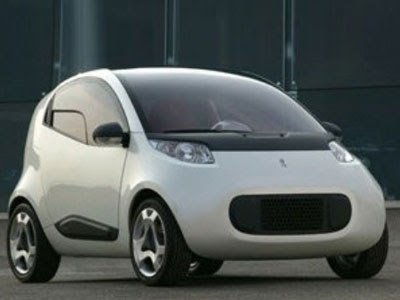
Pininfarina Nido Concept Mini Car

Pininfarina Nido Concept Mini Car

Italian Pininfarina, specializing in body work and design cars in Japan will present its first “independent” compact concept - Nido from the Italian language means “nest”.
In the process of design for double minicars developers at the forefront put security. And not only the safety of the driver and passenger, but also pedestrians. This is achieved through easily deformable front of the chassis that the collision to minimize the possibility of a fatal outcome. Also contributing to this rigid construction of the cabin, in turn, “protected” by the driver along with his companion, and a special shock-absorbing device.

Bài đăng phổ biến